Q4 2024 IRL Newsletter

One Lagoon, Once Voice:
Your Quarterly Guide to IRLNEP News and Progress
October 1, 2024, marks the beginning of our Fiscal Year 2024-2025. In October 2025, the IRL Council will mark its tenth anniversary since creation of the IRL Council and our collective efforts to reorganize the IRLNEP into a more effective, efficient, transparent, collaborative and mission-centric organization. 2025 also marks my tenth year as the IRL Council and IRLNEP Executive Director and my forty-sixth year working as a scientist along the IRL.
As we approach fall in Florida, this season of resilience and renewal also reminds me that I am in my seventh year fighting a see-saw battle against cancer. My continuing journey with cancer and the lessons of chronic disease, debilitating treatments and associated health vulnerabilities have strongly influenced my perspectives about how we approach healing.
Here are some thoughts I'd like to share about our ongoing work in trying to heal a chronically ill Indian River Lagoon and how we can become better stewards of its future:
- There is no one thing that will help the lagoon heal. There is no quick fix for IRL stressors. To restore and sustain a heathy Indian River Lagoon, all sources of nutrient pollution, sediments, stormwater and other pollutants must be reduced or stopped. We must be able to address multiple stressors simultaneously.
- Ecosystems impacted by multiple chronic stressors are more vulnerable to the catastrophic impacts of acute events. The narrow, shallow and slow-flow characteristics of the IRL make the system more vulnerable to harmful algal blooms and human impacts.
- We are the cause of the problem. A quote often attributed to Albert Einstein is "We cannot solve our problems with the same thinking we used to create them". We have the intellectual capacity to solve these problems. What we need is a paradigm shift in how we think about growth along our vulnerable coastlines. We need to rethink our relationship with the IRL and take greater responsibility for its health as a means for protecting our regional economy and future.
- The bar for success is set too low. The IRL watershed is home to the most advanced aerospace and space exploration technologies in the history of the human race. Current levels of wastewater treatment are not enough. Our goal should be to ensure that no nutrients, toxic chemicals (like PFAS compounds and human drugs) or excess water from wastewater treatment plants are discharged directly to IRL surface waters or dumped on land.
- Habitat restoration and species recovery efforts are complex and sometimes risky. There is never a guarantee of success. We must expect failures and learn from them. There is no perfect time to start habitat restoration or species recovery. Monitoring, data collection and synthesis are essential to evolving our knowledge and informing our learning.
- Take personal responsibility, have resolve, and most importantly, don't lose hope.
Indian River Lagoon Awarded $9.4 Million NOAA Grant for Habitat Restoration and Resilience
 We are thrilled to announce that the Indian River Lagoon Council has been awarded a $9.4 million NOAA Transformational Habitat Restoration grant, made possible through the Bipartisan Infrastructure Law and Inflation Reduction Act. This funding is part of a broader $240 million national initiative aimed at restoring habitats and bolstering coastal resilience.
Restoring a Vital Ecosystem
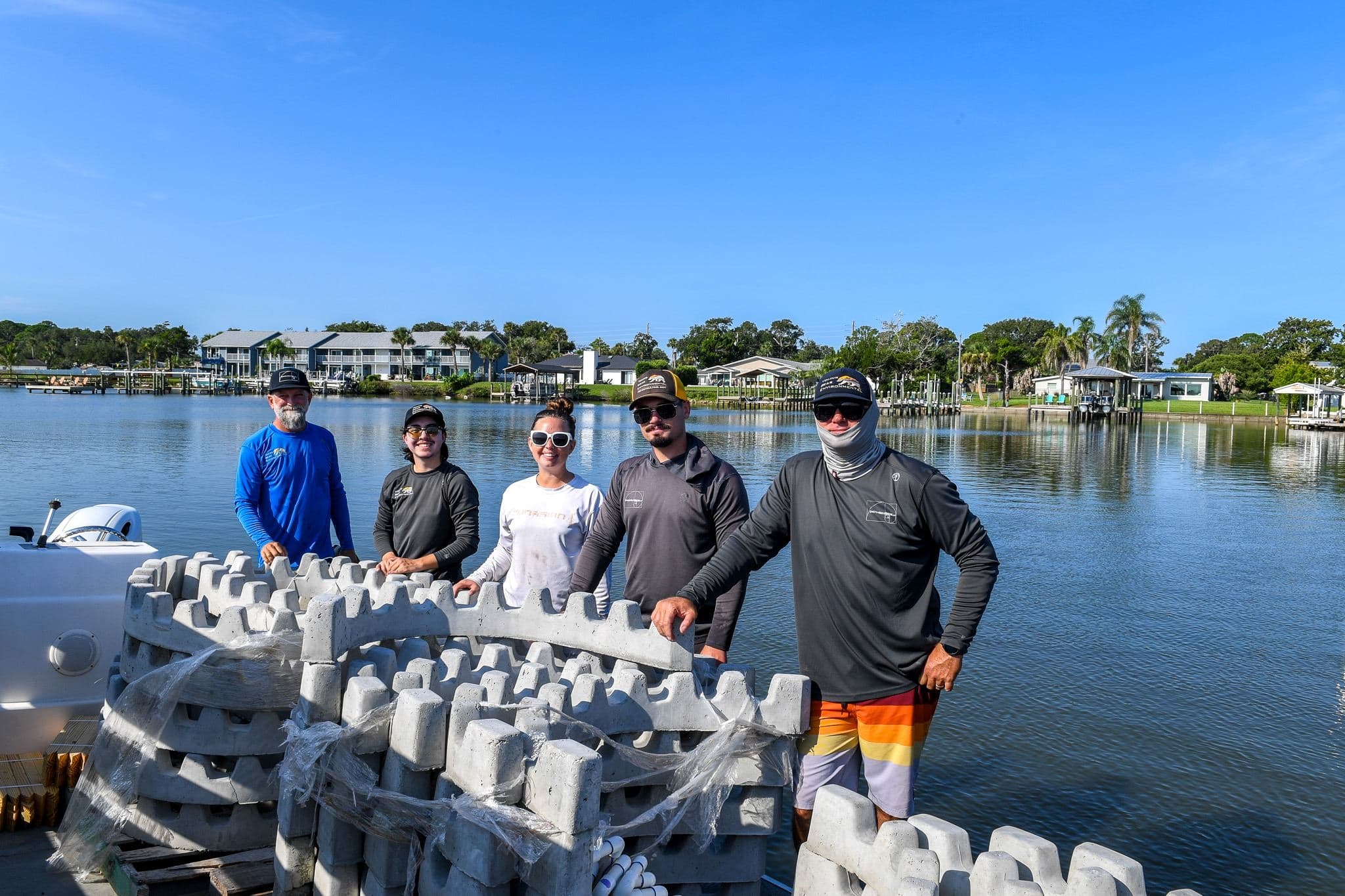
The Indian River Lagoon is a highly diverse estuary but has suffered significant habitat loss over the past decade. The NOAA-funded project will concentrate on restoring several key habitats in the lagoon, including seagrass, oyster reefs, salt marshes, and shorelines. The ambitious restoration targets include:
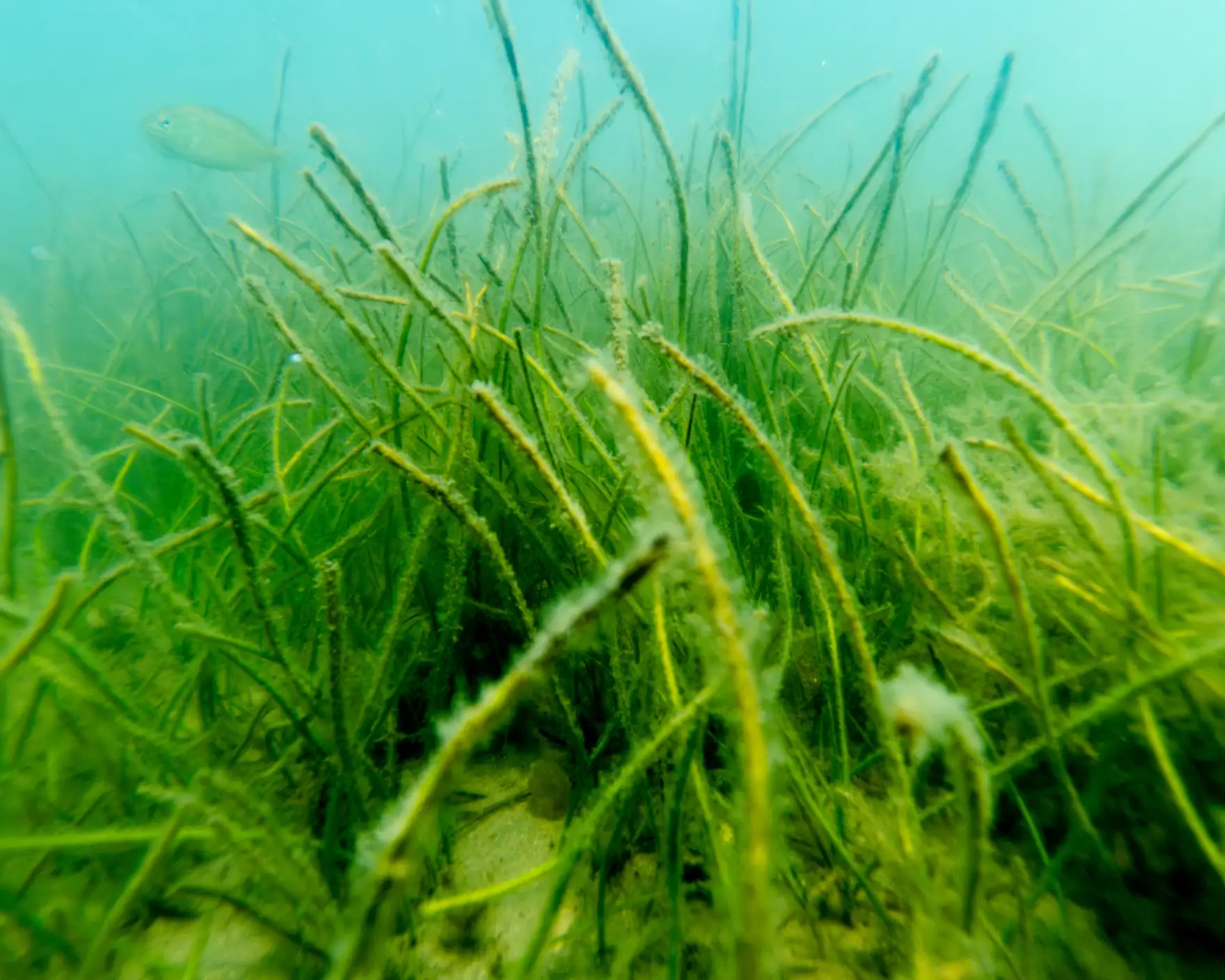
- Restoring 73 acres of seagrass with 257,800 planting units and 2,726,150 shoots
- Rebuilding 7.0 acres of oyster reefs
- Restoring 2,125 acres of wetlands
- Enhancing 8,450 linear feet of shoreline with mangrove and salt marsh plantings
These restoration efforts will not only help bring back vital ecosystems but will also serve to protect the Indian River Lagoon from the growing threats of erosion, rising sea levels, and other climate-related impacts.
A Collaborative Effort for Community and Conservation
One of the most exciting aspects of this project is the collaboration that it represents. The Indian River Lagoon National Estuary Program has brought together a coalition of ten organizations, ranging from research institutions to local government agencies, to execute these restoration projects. These organizations will work together to implement ecosystem-based restoration across the watershed.
In addition to the ecological restoration, the project will actively engage the local community through outreach events and volunteer opportunities. This is a chance for residents and visitors to not only witness the transformation of the lagoon but to be directly involved in its recovery.
Looking Ahead
With this $9.4 million grant, the Indian River Lagoon is poised to become a model for large-scale, community-driven ecosystem restoration. The project’s goals align perfectly with the nationwide efforts under NOAA’s habitat restoration and coastal resilience initiatives, ensuring that future generations can enjoy and benefit from the ecological treasures of the IRL.
Stay tuned for updates on project milestones and volunteer opportunities as we embark on this transformative journey to restore one of the nation’s most cherished estuaries, and visit OneLagoon.org/noaa-grant for more information.
Management Conference Quarterly Meetings
The IRLNEP Management Conference conducted its most recent series of quarterly meetings in August. Meeting at the IRLNEP offices in Sebastian, Florida on Tuesday, August 20, 2024, the Finance Subcommittee, Management Board and STEM Advisory Committee met beginning at 9:00 a.m. The Citizens Advisory Committee met on Thursday, August 22, 2024 at their new meeting time of 1 p.m. at the IRLNEP offices. The Board of Directors met on Friday, August 23, 2024 at Sebastian City Hall beginning at 9:30 a.m.
Finance Subcommittee
Management Board and the STEM Advisory Committees
 The Management Board and Stem Advisory Committee each made recommendations to the IRL Council Board of Directors to accept the FY 2023 independent audit report; approve the Fiscal Year 2024 and 2025 Final Budgets. They also recommended the Board approve moving forward with the newly awarded $9.4 million NOAA Transformational Habitat Restoration Grant by directing staff to negotiate and enter into contracts with NOAA and ten subawardees named in the grant proposal. They further recommended the Board of Directors authorize staff to release annual Requests for Proposals for Fiscal Year 2026 in five funding categories and accept the 2025 legislative priorities proposed by the Executive Director.
The STEM committee heard a presentation from Dr. Chuck Jacoby, Strategic Program Director of the Florida Flood Hub on the work being undertaken by the Flood Hub in resilience and coastal planning at the state level.
For details of all business conducted at the Management Board meeting, view the Meeting Packet.
For details of all business conducted at the STEM Advisory Committee meeting, view the Meeting Packet.
Citizen’s Advisory Committee
 The Citizens Advisory made recommendations to the IRL Council Board of Directors to approve the Fiscal Year 2024 and 2025 Final Budgets. They also recommended the Board approve moving forward with the newly awarded $9.4 million NOAA Transformational Habitat Restoration Grant by directing staff to negotiate and enter into contracts with NOAA and ten subawardees named in the grant proposal. They further recommended the Board of Directors authorize staff to release annual Requests for Proposals for Fiscal Year 2026 in five funding categories and accept the 2025 legislative priorities proposed by the Executive Director.
The committee heard a presentation by Donna Halloran, Executive Director of the Pelican Island Audubon Society on “Kayaks and Cameras for Audubon Advocates and RiverKidz Students”, a program funded through the IRLNEP Small Grant Program.
For details of all business conducted at the Citizens Advisory Committee meeting, view the Meeting Packet.
IRL Council Board of Directors
 Quarterly meetings week concluded with the IRL Council Board of Directors meeting, which incorporated all the recommendations from the Management Conference. The Board of Directors:
- Approved minutes from their previous meeting;
- Made the following appointments to the Management Conference:
- Lorae Simpson, affiliation change from Florida Oceanographic Society to SJRWMD, remains on STEM Committee;
- Dr. Malcolm McFarland, FAU-Harbor Branch, to the STEM Committee, replacing Dr. Dennis Hanisak;
- Steven Schlitt, Indian River County, to the Citizen’s Advisory Committee;
- Charlie Venuto, Merritt Island Wildlife Association, to the STEM Committee;
- Erin McDevitt, NOAA, to the STEM Committee
- Dr. Laura Wilson, Marine Resources Council, to the Management Board.
- Accepted the Management Conference recommendations to accept the FY 2023 Independent Audit Report and findings;
- Authorized staff to enter a contract with NOAA and issue 10 subawards per the Transformational Habitat proposal;
- Approved final budget amendments for FY 2024 and 2025 by resolutions 2024-04 and 2024-05 respectively;
- Authorized staff to issue Requests for Proposals in five funding categories for FY 2026;
- Renewed the IRL Council Interlocal Agreement for an additional five years;
- Reviewed and accepted the Executive Director’s annual performance review and extended his contract for an additional three-year term;
- Accepted the legislative priorities outlined by the Executive Director.
- The Board also heard water quality, committee and staff reports, as well as Executive Director Duane De Freese’s quarterly report.
For details of all business conducted at the IRL Council Board of Directors meeting, view the Meeting Packet.
NEWS FROM THE FRONT…
Local Government Happenings
We commend our municipal partners for their commitment, hard work and dedication to preserving and protecting our IRL. Here's a little about what's been up in the watershed.
New Smyrna Beach Utilities awarded $7.5 Million FDEP Grant for
Septic to Sewer Project in Silver Sands
At their August 13, 2024, City Commission meeting, City of New Smyrna Beach Commissioners voted unanimously to approve a grant agreement between New Smyrna Beach Utilities (NSBU) and Florida Department of Environmental Protection for Indian River Lagoon Water Quality Improvements to go towards the Silver Sands Project. The entire project is located with the Mosquito Lagoon Reasonable Assurance Planning Area, between the Atlantic Ocean and Indian River Lagoon, a 100% impacted watershed.
Due to the high volume of septic tanks, Silver Sands area has been identified as a high priority, with nearly 90% of its 526 parcels having septic tanks. Removal of the estimated 471 tanks will reduce approximately 1,701 pounds of nitrogen from entering Class I and II water bodies. NSBU will construct 25,000 linear feet of 8” gravity main, 2200 linear feet of force main, and four (4) lift stations and stub outs for each impacted lot. Talk about progress!
Scheduled for completion in Spring of 2029, it is not expected this funding will result in a fully completed project, and NSBU staff is currently planning other funding applications. KUDOS to all partners involved for their coordination!


Brevard Mosquito Control District to replace three (3) culverts at Honest Johns Impoundment if awarded DEP grant funds
At their August 27, 2024, Board of County Commissioners/Mosquito Control District Board Meeting, a Florida Department of Protection Wetlands Restoration and Protection Grant application was approved for the Honest Johns Impoundment Culvert Project. The proposed project will replace three (3) culverts with flash board riser water control structures to improve water exchange and fish passage between the impoundment and the open lagoon system. We’re excited to report that the increased water exchange between the impoundment and lagoon system is expected to also improve water quality in adjacent lagoon areas.
If approved, grant funding would pay for the three culverts, water control structures, and associated shoreline protection materials (i.e., fabric, stone, and rip rap) to be placed around the culvert openings facing the lagoon. As an in-kind local match, Brevard Mosquito Control District would provide the labor and equipment needed for the installation between January 1, 2025, and April 30, 2026.
Click the following link to learn more about Brevard County’s Mosquito Control Department.
City of Vero Beach unanimously votes to fully fund Stormwater Utility (SWU) for the 2024/2025 fiscal year
At their August 27, 2024, meeting, City of Vero Beach City Council approved the Annual Assessment Resolution (AAR) to officially adopt the rate of $75.17 per Equivalent Residential Unit (ERU) throughout the City, which will fully fund the Stormwater Utility program for the upcoming 2024/25 fiscal year. This increase will go into effect on October 1, 2024, and will be monitored for a year. Property owners’ funding will be an integral step toward protecting our precious Indian River Lagoon.
Review the City of Vero Beach’s Proposed Budget FY24-25
St. Lucie County’s Lake Indrio Preserve opens to the public in Fort Pierce
Through a multi-agency acquisition partnership, St. Lucie County purchased the Lake Indrio Preserve over 25 years ago to prevent development. Today, newly open to the public, Lake Indrio Preserve boasts gorgeous, newly built amenities for picnicking, fishing, kayaking and hiking trails. This site connects to a larger complex of preserves totaling more than 250 acres, including 230 acres of Old Dixie Highway that extends to the Indian River Lagoon. The hiking trail also leads to the 207-acre Indrio Savannahs Preserve to the south.
Additionally, there is also a 13-acre section of this preserve, which is not open to the public, and that is the only area in the State of Florida with Lakela’s Mint. Lakela’s mint is an endangered plant known from just a single native population scattered across 9 unprotected sites.
ICYMI – check out the August 28, 2024, Ribbon Cutting event here!
City of Stuart passes resolution opposing development in JD Park
 You may recall that citizens were vocal about proposed development in our state parks, particularly in Martin County. Well, at their September 9, 2024, City Commission meeting, the Board passed Resolution R93-2024 “Opposing DEP Planned Development in Jonathan Dickinson State Park.” The resolution opposes any proposal brought forward by the Florida Department of Environmental Protection to convert hundreds of acres of conserved land within Jonathan Dickinson Park into three public golf courses. It continues, that the preservation of environmentally sensitive lands and natural habitat serving the unique and diverse ecosystem within the park outweigh any potential benefits of public recreation and golf or alternative recreational uses when those uses disturb, diminish, and imperil the existing natural environment.
Review the Resolution here.
UPDATE: Do you remember RIPPLE, Martin County’s transformational Stormwater Treatment Area in Old Palm City? In September, The Florida Native Plant Society selected the project as the winner of their 2024 Garden of Excellence Award. When Martin County’s Native Plant Society incorporated over 11,000 native plants, walking trails, and educational elements, they not only enhanced the beauty of the area but also made a significant impact on the environment by reducing phosphorus and nitrogen levels in the Indian River Lagoon system.
Watch and learn more about The Ripple Project.
Upcoming Grant Opportunities for Water Quality, Habitat Restoration, and Community-Based Projects
In Fiscal Year 2025-2026, the Indian River Lagoon National Estuary Program (IRLNEP) will offer several exciting funding opportunities to support water quality improvement, habitat restoration, community engagement, scientific innovation, and priority communities. These grants, funded by local contributions, the EPA, the Bipartisan Infrastructure Law and specialty license plate sales will provide vital support to projects that enhance the health and resilience of the Indian River Lagoon (IRL). Proposals for categories 1-4 are due by December 13th at 5pm, while category 5 requires a letter of intent due by November 15th at 5pm. Here’s a brief overview of the available grants:
Water Quality Improvement Projects
Total Funding Available: $350,000
Projects focused on reducing or removing excess nutrients and contaminants from land-based or legacy sources are eligible. Examples include stormwater management, septic-to-sewer conversions, groundwater remediation, and muck removal. Multiple awards are expected.
Habitat Restoration Projects

Total Funding Available: $150,000
Innovative and high-impact habitat restoration projects are encouraged. Projects such as living shorelines, oyster reef restoration, and multi-agency initiatives that can demonstrate a transformative impact on lagoon restoration practices will be prioritized.
Community-Based Restoration Projects
Total Funding Available: $125,000
This category supports citizen-driven projects that restore habitats and engage the community. Emphasis will be placed on projects aligned with the IRLNEP’s Comprehensive Conservation and Management Plan (CCMP), including those focused on oyster restoration, invasive species removal, and coastal resilience.

Science and Innovation Projects
Total Funding Available: $200,000
Grants will support cutting-edge research and technology that contribute to the restoration of water quality, habitats, and overall lagoon health. Projects exploring new approaches to predict harmful algal blooms, nutrient cycling, and innovative seagrass restoration techniques are encouraged.
Priority Communities Projects
Total Funding Available: $1,180,400
These grants focus on smaller-scale, high-impact projects that improve infrastructure, enhance community engagement, and build organizational capacity within nonprofit organizations serving priority communities. Eligible projects may address issues such as stormwater flooding prevention, Lagoon-Friendly gardening, and environmental education programs like citizen science and anti-litter campaigns. This grant categories requires a Letter of Intent due by 11/15.
For more information and application details, please visit onelagoon.org/open-proposal-requests/. These funding opportunities provide an exciting chance to make a lasting impact on the Indian River Lagoon and contribute to its long-term sustainability!
Indian River Lagoon Specialty License Plate

Purchasing an Indian River Lagoon specialty license plate benefits the environment and the community. By choosing this specialty plate, you directly contribute to water quality and habitat restoration projects to protect this unique ecosystem. In late April of 2023, the license plate was redesigned. The new design is vibrant and colorful, reflecting the beauty of our lagoon.
Examples of recent habitat restoration projects have included: shoreline restoration, living shorelines, oyster shell recycling and oyster reef restoration, wetland restoration, shoreline stabilization, sewer line extension, and septic to sewer conversions.
If you do not already have an Indian River Lagoon (IRL) specialty license plate and want to know how to purchase one, the process is a little bit different depending on whether you are purchasing an IRL license plate for the first time or renewing one. We have outlined each process on our website: IRL License Plate – Indian River Lagoon (onelagoon.org)
You can even give specialty license plate gift certificates! Florida Department of Highway Safety and Motor Vehicles has authorized the issuance of specialty license plate gift certificates (Specialty License Plate Gift Certificate Program). The program allows anyone to purchase a specialty license plate as a gift for a motor vehicle registrant. Simply pay the annual fee for the specialty plate. You will receive a receipt, and a credit will be issued in the name of the gift recipient. Who wouldn’t love a new IRL specialty license plate for the holidays or a birthday?
The Newest Season of One Lagoon – One Voice Podcast
Are you passionate about the Indian River Lagoon and eager to learn more about the efforts to protect and restore its health? Tune in to the newest season of our “One Lagoon – One Voice,” podcast. Each episode is packed with insightful interviews featuring experts, leaders and community members who share their knowledge and perspectives on a variety of topics related to the lagoon. This season, we delve into a variety of innovative projects, each playing a crucial role in restoring the balance of the Indian River Lagoon. Here is just a sampling of this season’s episodes.
Connecting Homeowners to Sewer Systems: Discover how local homeowners are joining the fight against pollution by connecting their properties to modern sewer systems. This crucial step helps reduce the harmful runoff that has plagued the lagoon for years.
Floating Wetland and Other Water Treatment Projects: Explore the fascinating world of floating wetlands and other water treatment projects, a cutting-edge solution designed to absorb pollutants and provide a habitat for wildlife. These floating islands are not only beautiful but also incredibly effective in reducing pollution levels.
Long-Term Monitoring of Harmful Algal Blooms: Learn about the dedicated scientists who are tirelessly monitoring harmful algal blooms. Their work is essential in understanding and mitigating the impacts of these blooms on the lagoon’s delicate ecosystem.
Clam Restoration: Clam restoration is more than just an environmental effort; it’s a community-driven initiative that showcases the power of collective action. By restoring clam populations, we’re taking significant steps toward improving water quality and ensuring the long-term health of the Indian River Lagoon.
Brevard County’s Save Our Indian River Lagoon Program: Get an inside look at Brevard County’s ambitious Save Our Indian River Lagoon program. This comprehensive initiative encompasses a range of projects aimed at restoring water quality and ensuring the lagoon’s health for future generations.
Oyster and Shoreline Restoration in Mosquito Lagoon: Hear how professors at the University of Central Florida are restoring oyster reefs and shorelines of the Canaveral National Seashore in the Mosquito Lagoon.
All About Mosquito Control Impoundments: We chat with Bethune-Cookman University, the Indian River Land Trust, and Florida Institute of Technology researchers to discuss mosquito impoundments and how they contribute to mosquito control, water quality, and improved fish habitats.
Get the Muck Out Of Here: Researchers from the Florida Institute of Technology talk all about muck — and why removing it from the Indian River Lagoon is so important.
Join us this season as we celebrate the remarkable efforts of our community and experts working together to bring the Indian River Lagoon back to life. Each episode is a journey of hope, innovation, and dedication, showcasing how collective action can make a profound difference.
You can listen to One Lagoon – One Voice podcasts on Apple Podcasts, Spotify, YouTube, or any other platform. You can also access the podcasts at onelagoon.org/one-lagoon-one-voice-podcast/. Tune in to One Lagoon – One Voice today!
Share this post:
About the Author: One Lagoon