Q4 2026 IRL Newsletter
One Lagoon, Once Voice:
Your Quarterly Guide to IRLNEP News and Progress
Seasons of the Lagoon – Protecting what we love
I was driving south on U.S. 1 to our Sebastian office just before daybreak a few weeks ago. As the sun peaked above a towering anvil cloud to the east over the Atlantic Ocean and the thin black silhouette of the barrier island, the explosion of light with red, orange and pink rays in the sky and reflection on the waters of the Indian River Lagoon. The view compelled me to pull into Jorgensen’s Landing in Grant-Valkaria to watch the dawn of a new day on the Lagoon. The light east-northeast breeze felt familiar. It was a bit cooler, a bit drier, and the air smelled different. These were the first signs of the late summer-to-fall seasonal transition. It was refreshing after a summer that felt like one of the hottest in my 47 years as a Florida resident. If you surf or fish, you recognize the shift immediately. While I was writing this message, Captain Frank Catino, Florida fishing guide for over 45 years and chair of the IRLNEP Citizens Advisory Committee, called me from the water to ask me, “are you feeling it?”. I was. I imagine that our indigenous people, the Ais Indians, understood these subtle natural seasonal transitions. I wonder if most of the 3.5 million people who now live within the Indian River Lagoon watershed recognized the change.
The decline of humans connections to nature has been documented for decades. At risk is our physical and mental health, the quality of life in our communities, our understanding about the provision of ecosystem services that only natural areas and healthy waters provide, and our appreciation for the diversity of animals and plants that depend on natural areas and clean waters. In 2025, The Balmoral Group calculated some of those values for the Indian River Lagoon ($28.3 billion in annual economic impact; support for 128,400 jobs, and provision of ecosystem services estimated at $10 billion annually).
A famous and often restated quote about children and nature is by Sir David Attenborough, globally recognized and respected English broadcaster, natural historian, and writer who reached 100 years old this year: “If children do not grow up knowing about nature and appreciating it, they will not understand it. And if they do not understand it, they won’t protect it. And if they won’t protect it, who will?”
The Indian River Lagoon system and fragile barrier island that separates the estuary from the Atlantic Ocean are dynamic coastal features that have changed dramatically since Spanish explorers first mapped Ponce de Leon Inlet in the early 1500’s. Bob Dylan’s anthem, “The Times They Are a-Changin” is an appropriate theme for the last 500+ years of human inhabitation and IRL watershed changes. An early IRLNEP document “A Fragile Balance of Man and Nature” characterized the IRL historic timeline with four multi-decadal periods of change: colonization, homesteading, drainage, and urbanization. As we celebrate recent progress, I want to share several perspectives:
- It is essential to continue targeted investment in scientific research to support restoration;
- Long term monitoring must continue to aid decision-making and drive science-based restoration and protection efforts;
- For the southern IRL, continuing investment in water quality projects is essential;
- For the northern IRL, the rapid growth of aviation, aerospace and space launch activities is providing both new challenges and new opportunities.
Maybe the most important perspective is this: despite decades of impacts from growth, habitat loss, and poor water quality, the Indian River Lagoon continues to demonstrate its resilience and now is not the time to slow our restoration efforts. Seasonal transitions are a reminder that in nature, change is constant. We can’t question whether the IRL will continue to change, but whether we can commit to guiding change so that future generations will still be able to pause along the shoreline at dawn, feel the first cool autumn breezes, and witness a thriving Indian River Lagoon.
Working Together to Restore the Indian River Lagoon

Photo Credit: Brevard County
When most people think about protecting the Indian River Lagoon, stormwater ponds may not be the first thing that comes to mind. Yet these ponds play an important role in keeping pollutants out of local waterways and improving water quality throughout the lagoon watershed.
To help residents better understand these important systems, Brevard County’s Save Our Indian River Lagoon (SOIRL) Program launched the SOIRL Stormwater Pond Pilot Program. Supported by funding from the IRLNEP and the SOIRL half-cent sales tax, the pilot program partnered with four homeowners’ associations (HOAs) to increase awareness of stormwater pond maintenance, encourage community involvement, and identify opportunities to reduce pollution entering the Indian River Lagoon.
Stormwater ponds are designed to collect rainfall runoff from neighborhoods, reducing flooding while capturing pollutants before they reach nearby waterways. When properly maintained, these ponds can remove excess nitrogen and phosphorus as well as suspended solids from stormwater. Considering that stormwater is a major contributor of nutrient pollution in the lagoon, improving pond management can have meaningful benefits for lagoon health.
The pilot program focused on four key goals: educating HOA residents about stormwater pond best management practices, engaging volunteers through citizen science water quality monitoring, helping communities identify and implement pond improvement projects, and increasing awareness of the connection between neighborhood actions and lagoon health.
Throughout the project, participating residents learned about how stormwater ponds function, common maintenance challenges, and practical steps communities can take to improve pond performance. Volunteers also participated in water quality monitoring to better understand nutrient levels within neighborhood ponds. These activities provided valuable data while also helping residents develop a stronger connection to the water resources in their own communities.
One of the most important outcomes of the pilot program was increased awareness. Residents gained a better understanding of how stormwater ponds influence water quality and expressed support for ecological improvements that could enhance pond function and benefit the lagoon. While surveys showed only modest changes in attitudes and behaviors over the course of the project, the program successfully established a foundation for long-term community engagement.
Management Conference Quarterly Meetings
The IRLNEP Management Conference conducted its most recent series of quarterly meetings in August. The Finance Subcommittee, Management Board and STEM Advisory Committee each met on Tuesday, August 18, beginning at 9:00 a.m. at the IRLNEP Offices in Sebastian. The Citizens’ Advisory Committee met on Thursday, August 20, beginning at 1:30 p.m. at the IRLNEP Offices in Sebastian. The IRL Council Board of Directors met on Friday, August 21, at Sebastian City Hall beginning at 9:30 a.m.
Finance Subcommittee
The Finance Subcommittee reviewed the quarterly financial statements, Fiscal Year 2026 IIJA Work Plan Amendment, Fiscal 2026 and 2027 Final Budget Amendments and the EPA Office of Inspector General Audit Report. Because the committee lacked a quorum, no votes were taken but by a consensus of those present, these items were referred to the Management Board for recommendation and acceptance by the IRL Council Board of Directors.
For details of all business conducted at the Finance Subcommittee meeting, view the Meeting Packet.
Management Board and the STEM Advisory Committees
Both the Management Board and STEM Committee heard quarterly water quality updates from South Florida and St. Johns Water Management District staff and a presentation from Melisa Diolosa, SJRWMD, on the newly released video, Connected by Water: The Indian River Lagoon. Management Board received an additional presentation by Josh Mills, Native Shorelines, on Living Shoreline Collaboration: A Homeowner’s Lagoon-Friendly Approach. The STEM Committee received a presentation by Aaron Adams, Bonefish and Tarpon Trust, entitled, Angler Observations Provide Valuable Ecological Data for the IRL.
There was no Old Business. New business included a discussion of RFP development for the Science and Innovation funding category. Duane de Freese guided discussion and a Mentimeter survey of directed questions to provide input. He also guided discussion and collected input of 2027 legislative priorities.
Dan Kolodny reviewed the 2028 funding categories and funding amounts for annual RFPs to be released in September. Dan also reviewed amendments to the FY 2026 IIJA Work Plan, FY 2026 Final Budget, and FY 2027 Final Budget, as well as the EPA Office of Inspector General Audit Report.
The STEM committee also heard from Dr. Malcolm McFarland, FAU-HBOI, regarding the IRL Observation Network (IRLON). Dr. McFarland requested feedback on the variety of ways data from IRLON is used. Dr. De Freese requested all input be referred to him and he would compile all submissions for Dr. McFarland.
The Management Board and STEM Advisory Committee recommended approval of each of the items outlined above. Staff provided updates on Community Engagement, IT and Data Science projects, and the Executive Director’s report.
For details of all business conducted at the Management Board meeting, view the Meeting Packet.
For details of all business conducted at the STEM Advisory Committee meeting, view the Meeting Packet.
Citizen’s Advisory Committee
The Citizen’s Advisory Committee heard a presentation by Jessica Cline, Research and LagoonWatch Coordinator with Marine Resources Council, on, Monitoring IRL Water Quality with Citizen Scientists.
There was no Old Business. Dr. De Freese led discussion on development of the Science and Innovation RFP and survey questions in Mentimeter. He also led discussion of 2017 legislative priorities and collected suggestions from the committee. Dan Kolodny reviewed the Fiscal Year 208 RFPs, amendments to the FY 2026 IIJA work Plan, 2026 Final Budget, 2027 Final Budget and review of the EPA office of Inspector General Audit Report. All items were recommended for approval to the Management Board and acceptance by the Board of Directors.
Staff provided updates on Community Engagement, IT and Data Science projects, and the Executive Director’s report.
For details of all business conducted at the Citizens Advisory Committee meeting, view the Meeting Packet.
IRL Council Board of Directors
The week of quarterly meetings concluded with the IRL Council Board of Directors meeting, which incorporated all the recommendations from the Management Conference. The Board of Directors:
Approved the Consent Agenda:
Approved the May 8, 2026 Board of Directors meeting minutes
Amended Operating Procedures Manual
Amended Personnel Handbook
Board of Directors Appointments to IRLNEP Management Conference:
- Gary Ritter, Management Board, affiliation change from the City of Okeechobee to Citizen
- Pete Eggert, Management Board, change from alternate to replace Dale Ketchum to Management Board
- Lauren Kleinman, STEM Committee, to replace Eddie Widder
The Board accepted the Management Conference recommendations for development of the Science and Innovation RFP as well as the Water Quality, Habitat Restoration, Community-Based Restoration and Small Grants RFPs.
The Board also approved the Amended IIJA Work Plan, Fiscal Year 2027 final budget, including staff’s recommendation to swap a withdrawn proposal for a similar one that has already been ranked and approved for funding. They also approved the Fiscal Year 2026 Final Budget Amendment and Fiscal 2027 Final Budget Amendment. They accepted the EPA Office of Inspector General Audit Report; and provided input and approval of 2027 legislative priorities and gave direction to the Executive Director to represent the Council in fiscal, policy, and appropriations discussions. Staff provided updates on Community Engagement, IT and Data Science projects, and the Executive Director’s report.
For details of all business conducted at the IRL Council Board of Directors meeting, view the Meeting Packet.
NEWS FROM THE FRONT…
Local Government Happenings

Photo Credit: St. Johns River Water Management District
Watch St. Johns River Management District’s new Connected By Water: Indian River Lagoon video highlighting Indian River Lagoon restoration efforts!
City of Edgewater Builds a Living Shoreline for the Lagoon
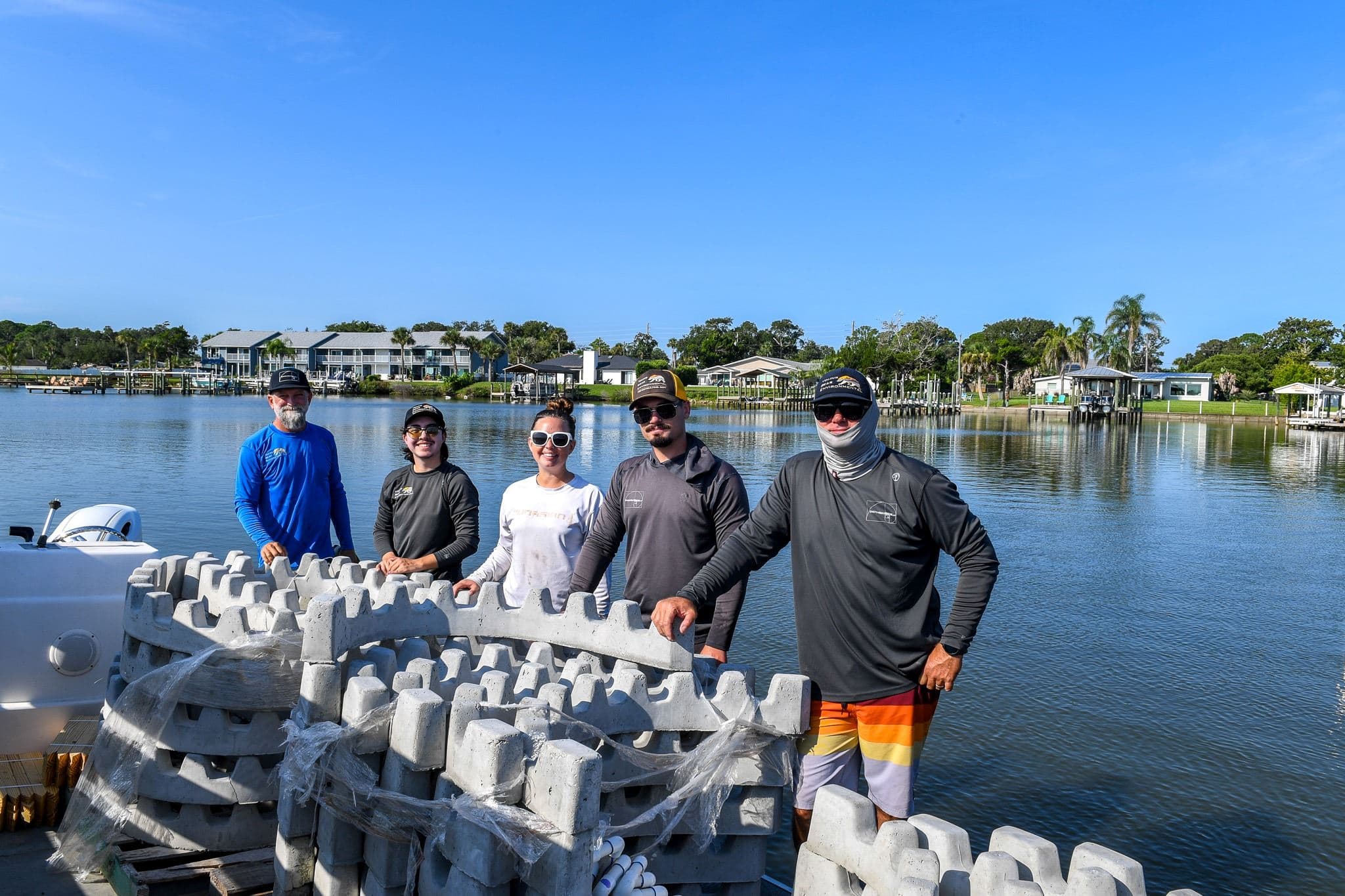
The City of Edgewater is taking a hands-on approach to restoring the Indian River Lagoon with a new oyster and seagrass restoration project at Veteran’s Park. In partnership with Riverside Conservancy, the city has begun the first phase by installing 60 engineered oyster modules that will provide habitat for marine life while helping filter the water.
Every project equals progress, and this one demonstrates how local restoration can contribute to a larger lagoon-wide effort. The project’s next phase will introduce seagrass to the shoreline, creating interconnected habitats that provide food and shelter for fish and other wildlife while helping stabilize sediments.
Photo Credit: St. Johns River Water Management District
The Veteran’s Park project is part of Riverside Conservancy’s broader effort to restore living shorelines at three Edgewater riverfront parks. With support from partners including the St. Johns River Water Management District, Indian River Lagoon National Estuary Program, and CEK Foundation’s Earth Focus Initiative, these community spaces are becoming opportunities for both restoration and environmental education.
As oysters establish and seagrass takes root, the project will add habitat and natural shoreline protection while demonstrating the value of working together for the lagoon. It’s a reminder that restoration doesn’t have to start with a massive footprint – partnerships and individual projects can add up to meaningful progress.
Restoring Pine Flatwoods in Titusville for a Healthier Lagoon

Photo Credit: GreenSpace Water Alliance
Restoring the Indian River Lagoon takes more than large-scale projects. It also takes smaller efforts to restore habitat, engage communities, and demonstrate what a healthier landscape can look like. The Pine Flatwoods Education Station and Restoration Project in Titusville is one example of partners coming together to make progress—one phase at a time.
Located at the Florida Department of Environmental Protection’s field station, the project brings together GreenSpace Water Alliance, the Florida Department of Environmental Protection’s Indian River Lagoon Aquatic Preserves Team, and Friends of the Spoil Islands. Together, the partners are working to transform approximately 4,200 square feet into a living demonstration of native Pine Flatwoods habitat, while creating opportunities for education, community involvement, and long-term ecological monitoring.
The project is intentionally designed to grow in phases. Phase One will focus on the first 1,400 square feet, including removing invasive vegetation, preserving existing native plants, installing native wildflowers, grasses and shrubs, and establishing a sustainable irrigation and rainwater-harvesting system. Future phases will expand the restoration area and add features such as a walking trail, interpretive signage, pollinator and wildlife habitat, and monitoring areas.
While the project may begin on a small footprint, its ecological benefits reach beyond the site itself. Native Pine Flatwoods can help filter stormwater before it reaches the lagoon, reduce erosion and sediment transport, capture excess nutrients, and increase rainwater infiltration and groundwater recharge. The restored habitat will also provide resources for pollinators and wildlife while demonstrating the value of native plants in Florida landscapes.
Through volunteer workdays, native plant workshops, school field trips, citizen science, and continued monitoring, the Pine Flatwoods Education Station can become both a restored habitat and a place where people experience the connection between healthy uplands and a healthy Indian River Lagoon.
Building a Better Shoreline in Indian River County, One Reef at a Time
At Coconut Point in Sebastian Inlet State Park, a new living shoreline is bringing together innovative design, natural habitat, and a strong network of partners to address erosion along the Indian River Lagoon. The Coconut Point Shoreline Resilience Project recently wrapped up work along approximately 200 feet of eroded shoreline.
The project uses 22 honeycomb-shaped concrete reef arches, installed by Reef Arches, LLC, to reduce wave energy and help stabilize the shoreline without relying on a traditional seawall. The structures also create new habitat for marine life, including oysters, fish and other invertebrates to settle and thrive.

Photo Credit: Sebastian Inlet District
With what we know about biodiversity, the reef arches are only part of the plan. Over the coming months, approximately 90 red mangroves will be planted between the arches and the shoreline. As the mangroves grow, they will help further protect the shoreline while providing valuable habitat and supporting the natural functions of a healthy coastal ecosystem.
The project is also a great example of what can happen when partners bring different resources and expertise to the table. The Sebastian Inlet District, Florida Department of Environmental Protection, Sebastian Inlet State Park, Ocean Research & Conservation Association (ORCA), Reef Arches, and MANG contribute funding, materials, expertise, and volunteer support. ORCA will also work with citizen scientists to monitor the shoreline for at least three years, tracking changes in sediment, habitat, seagrass, biodiversity, and shoreline growth.
A St. Lucie County Preserve Reopens and the Watershed Gets a Boost
There’s good news for visitors to George LeStrange Preserve: the full lake trail is open again following restoration work along Ten Mile Creek. St. Lucie County’s Environmental Resources Department partnered with Ducks Unlimited to restore the historic floodplain connection and improve the way water moves through the preserve’s wetlands.
The project reconnects historic remnant oxbows, helping increase seasonal water levels and restore a mosaic of wetland habitats. These wetlands provide important wildlife habitat while also serving a natural role in storing and slowing floodwaters. Native plantings along streambanks will help stabilize soils and reduce the movement of nutrients and sediment downstream.
That work has benefits beyond the preserve itself. Improving water movement and reducing nutrient and sediment transport can support water quality in Ten Mile Creek and the North Fork of the St. Lucie River, ultimately contributing to efforts to reduce nutrient inputs to the Indian River Lagoon.
The 94-acre preserve offers plenty to explore, including a 37-acre catch-and-release lake, a one-mile loop trail, and side trails through pine flatwoods, scrubby flatwoods, and palm hammocks. Though the lake trail has reopened, the river trail remains temporarily closed as crews install new footbridges along an improved trail that will highlight the restoration.
Projects like this show how restoration and recreation can work together. By investing in the lands and waterways that connect to the lagoon, and bringing partners together to restore their natural functions, St. Lucie County is helping protect wildlife, improve water quality, and preserve places where the community can experience the natural side of the watershed.

Photo Credit: South Florida Water Management District
South Florida Water Management District, Martin County and Partners Complete the C-23 Diversion Project to Reduce Water and Nutrient Impacts on the Lagoon
Water from the C-23 Canal now has a different path to the St. Lucie River and Indian River Lagoon. On September 9, state and local partners celebrated completion of the C-23 Canal Estuary Discharge Diversion Project in Palm City. The $50 million project uses a new seven-mile canal and pump station to redirect excess water south to the C-44 Reservoir and Stormwater Treatment Area, where it can be stored and treated instead of flowing directly into the estuary.
The project was already making a difference during operational testing. Since testing began in May, the system had diverted approximately 4.8 billion gallons away from the St. Lucie Estuary. The new pump station can move up to 112,000 gallons of water per minute, giving managers another tool to reduce high-volume freshwater discharges and help maintain a more natural salinity gradient in the estuary.

Photo Credit: US Army Corps of Engineers
The water doesn’t simply disappear—it gets another opportunity to be managed. By sending C-23 flows to the C-44 Reservoir and Stormwater Treatment Area, the project connects with other components of the Indian River Lagoon-South Restoration Project. The C-44 system provides both storage and treatment, helping reduce nutrient and sediment loads before water is released downstream.
The scale of the potential water-quality benefit is significant. The project is expected to prevent an average of approximately 55,000 pounds of nitrogen and 14,000 pounds of phosphorus from reaching the lagoon system each year. Reducing these nutrient inputs can help address one of the major stressors facing the St. Lucie Estuary and support healthier conditions for the broader Indian River Lagoon ecosystem.
The C-23 diversion is another example of what can happen when partners tackle a complex watershed challenge from multiple angles. The South Florida Water Management District, Florida Department of Environmental Protection, U.S. Army Corps of Engineers, and local communities all played roles in advancing the larger restoration effort. Together, projects like this are creating more ways to manage water before it reaches the lagoon—and Every Project Equals Progress toward a healthier Indian River Lagoon.
Learn more about the South Florida Water Management District and United States Army Corps of Engineers Jacksonville District’s Indian River Lagoon – South (C-23/C-24 Stormwater Treatment Restoration) Project here.
Rebuild: Make Your Next Home Improvement Lagoon-Friendly
So far, we’ve explored four of the Indian River Lagoon National Estuary Program’s 10 Rs for Lagoon-Friendly living: Reduce, Remove, Restore and Respond.

Photo Credit: IRLNEP
We’ve discussed simple everyday choices that reduce pollution, from using less fertilizer and fewer pesticides to keeping grass clippings and leaves on our own properties and managing stormwater. We’ve explored how removing invasive plants and restoring our yards with native Florida plants can rebuild habitat; and, how responding means staying informed, getting involved and taking care of things like our septic systems.
Now, let’s Rebuild!
Rebuilding is about seeing the features around our homes, lawns and even balconies and patios as opportunities. The next time something needs to be replaced, repaired or updated, consider choosing an option that works a little harder for the lagoon.
Replace Some Lawn with Native Plants
You don’t have to give up your entire lawn. Start small by replacing a portion of traditional turfgrass with native Florida plants. Native plants are adapted to our climate and once established, generally require less water, fertilizer and maintenance. They also provide valuable food and shelter for birds, butterflies, pollinators and other wildlife.
Think of it as turning part of your yard into a little piece of Florida habitat and another place where rainwater can slow down and soak into the ground.
No Yard? No Problem!

Photo Credit: PIAS
Apartment or condo dweller? You can still Rebuild for the lagoon! Add native Florida plants to pots and planters on your patio, balcony or porch. Even a few well-chosen native plants can provide food and habitat for pollinators while bringing a little more Florida nature into your everyday surroundings. And if you have access to a community garden or shared landscape, consider encouraging the addition of native plants there, too. Check out this resource: Create a Pollinator Pot – Florida Wildflower Foundation.
Upgrade Your Septic System
If you have a traditional septic system, consider exploring an advanced treatment system that treats wastewater more effectively.
And when sewer becomes available in your neighborhood, connecting to the sewer system can be another important opportunity to reduce the amount of nutrients reaching our waterways.
Even if a major upgrade isn’t right for you today, keeping your existing septic system properly maintained is still an important Lagoon-Friendly action. Know your system. Inspect it regularly and pump it as needed.
Let Rain Soak In

Photo Credit: Marine Resources Council
Replacing a driveway, patio or walkway? Consider permeable pavement.
Unlike traditional pavement, permeable surfaces allow rainwater to move through the surface and soak into the ground instead of quickly running across your property toward storm drains, ditches or canals.
It’s a great example of turning a routine home improvement into a lagoon-friendly upgrade.
Seawalls
Waterfront property owners have another opportunity to Rebuild right along the shoreline.
When it’s time to replace or substantially repair a seawall, consider a living shoreline. Instead of relying entirely on a hard structure, living shorelines use native plants, natural materials and features such as oyster reefs to create a more natural shoreline. Living shorelines can help reduce erosion, buffer storm impacts and provide important habitat for fish, crabs, birds and other lagoon wildlife.
Remember: there is no one issue harming the lagoon and there is no silver-bullet solution. The lagoon’s challenges are varied and complex, which means its recovery will take many different approaches and collaboration at every level. Government investments, nonprofit restoration efforts and the choices we make at home all contribute to the bigger picture.
Every project is an opportunity. Every improvement is progress. Every home can be part of the solution and each of us has a role to play. So, when it’s time to replace, repair or rethink something around your home, ask yourself, “Can I rebuild it for the lagoon?” Together, let’s live Lagoon-Friendly!
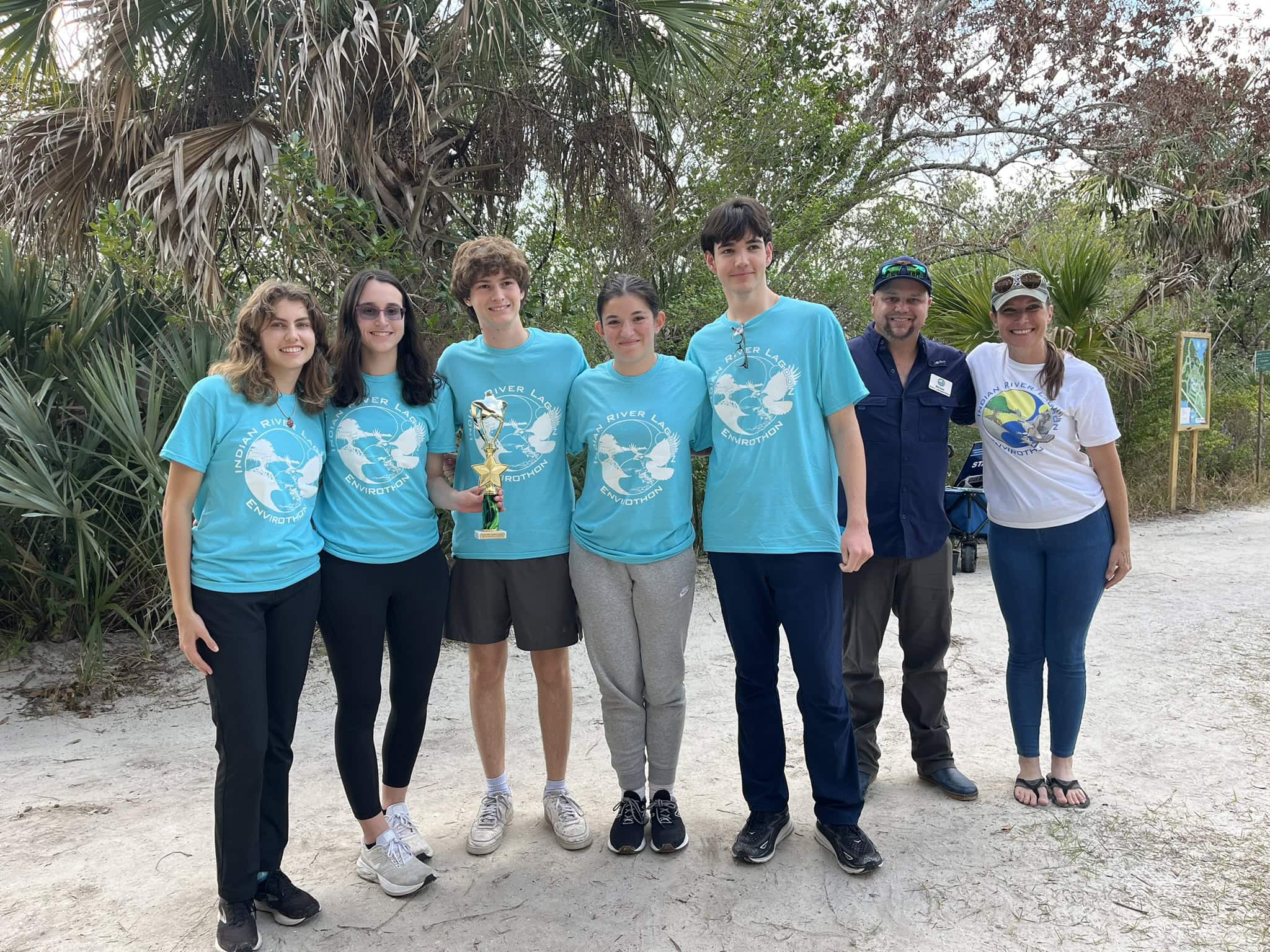
Get Ready for the 2027 Indian River Lagoon Regional Envirothon!

Photo Credit: Laura LaBeur
Calling all young environmental explorers, problem-solvers, and future conservation leaders! What do you get when you combine science, the great outdoors, teamwork, friendly competition, and a whole lot of curiosity? Envirothon!
The Indian River Lagoon Regional Envirothon invites students from Martin, Okeechobee, St. Lucie, Brevard, and Indian River Counties to put their environmental knowledge and teamwork skills to the test.
Envirothon is an exciting, hands-on environmental competition where student teams tackle real-world challenges involving:
- Aquatic Ecology: Discover what makes healthy waterways thrive.
- Forestry: Learn to identify trees and understand the vital role forests play in our environment.
- Soils & Land Use: Dig into the science beneath our feet and explore how we use and protect our land.
- Wildlife: Test your knowledge of local wildlife, habitats, and ecosystems.
- Current Environmental Issues: Put your critical-thinking skills to work on today’s environmental challenges. This year’s topic is “Soil Health Management: Agricultural Principles and Stewardship.”
Along the way, students work with environmental professionals, get hands-on experience, build leadership and communication skills, and make connections with other young people who share their interests in the natural world.
For teams that rise to the top, the adventure doesn’t stop at the regional competition. Winning high school teams can advance to the Florida Envirothon and the international NCF-Envirothon competition, which will be hosted at Mount St. Mary’s University in Emmitsburg, Maryland from July 24 – 30, 2027.
Grab your friends. Build your team. Get outside. Change the future.
Ready to get your team started? All you need is an adult advisor (teacher, scoutmaster, etc.) and 5 team members willing to learn and explore the six topic areas. Visit www.irlenvirothon.org to learn more and register.
Save the Date: Indian River Lagoon Regional Envirothon
- Where: Intergenerational Recreation Center, Indian River County, Florida
- When: January 27, 2027
- Sign-Up Deadline: January 13, 2027
October Celebrates Florida’s Native Plants, Greenways & Trails!
October is Native Plant Month and Greenways and Trails Month in Florida! Celebrate by discovering the benefits of native plants and by getting outside to explore Florida’s incredible network of greenways and trails.
Whether you’re planting for pollinators, walking, biking, paddling, or enjoying nature with family, October is the perfect time to connect with Florida’s natural landscapes.
Learn more:
- Florida Native Plant Society: Leader in Florida Native Plant Conservation | FNPS
- Florida Greenways & Trails Month: Greenways and Trails Month | Florida Department of Environmental Protection
Share this post:
About the Author: KJ Ayres